


Description
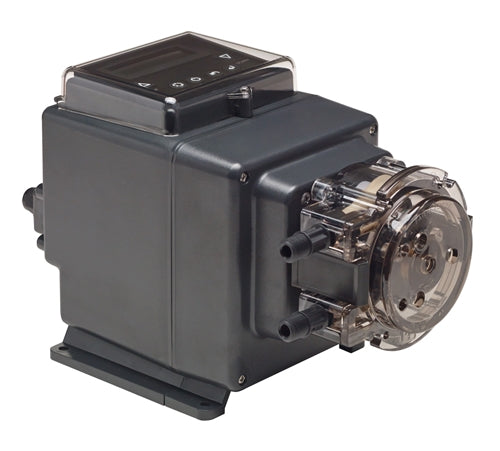
Stenner S3007
Stenner S3007 is rated:- Number 7 tube
- 0.4 to 40 gallons / day (1.51 to 151 liters / day)
- Rated to 100 psi
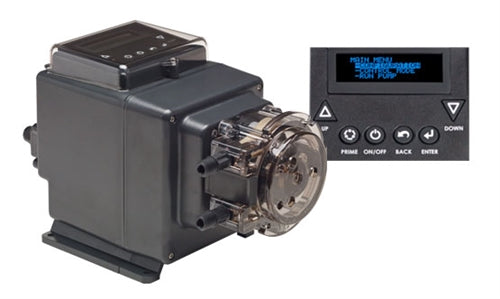
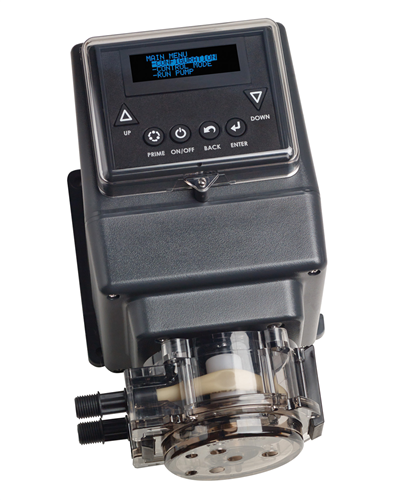
The OLED operating display is easy to navigate with intuitive programming. Select from the various modes of operation:
Pump Signal Inputs:
- Analog: 4-20mA, 0-10VDC – scalable, invertible
- Digital: Pulse, Hall Effect, PPM Feed Constant Flow, PPM Feed Variable Flow
- Manual: Manual, 7 Day/24 Hour Timer, Cycle Timer
- Analog: 4-20mA
- Digital: Three Relays
The totally enclosed pump is outdoor rated and built to NEMA 4X for demanding applications. Additional agency listings include NSF 61 & 372, cULus indoor/outdoor; CE IP65 is also available with selected voltages. The brushless DC motor is equipped with ball bearing support and the switch power mode offers energy efficiency. The splined shaft designed pump head and roller assembly allow smooth installation and replacement. Tube replacement is fast and easy with the patent pending QuickPro pump head from Stenner.
- We are implementing a control system at a water plant, and they have installed new Stenner S3007 model chemical pumps. Eventually we are probably going to move the controls over to Modbus, but for the time being, we want to turn the pumps on and off from the control system but have the flow control done on the pump itself. We currently have it set in PPM mode, but there were too many factors for the client. They want to be able to manually adjust the flow rate without having to enter into the system configuration. Is there a mode that would allow for that?
- You could run the pump in manual mode and use the standby terminals (4 & 5) to remotely start and stop the pump. If you send a normally closed dry contact signal to the standby terminals, the pump will go into standby and not run. When you open the contact, the pump will run at the speed it is set for. You can use the arrows on the keypad to manually adjust the speed. If you used a flow switch for this purpose, the flow switch would need to be normally closed (closed with no flow). This would place the pump into standby. Then, when there was flow, the flow switch would open and allow the pump to run. You could also use a PLC or other instrument to provide the closed (pump will not run) and open (pump will run) dry contact start stop signal.
The dosing will not be proportional to the flow if you operate the pump this way, but as you mentioned, the pump can be manually adjusted up or down.
The only caution I have is using an intermittent outlet or powered relay to power the pump on and off as a means of control. The electronics in this pump do not like to be powered on and off. The pump prefers to receive constant power and then started and stopped via a control signal wired to the terminal block on the pump.
Shipping and Transit Times
This product is made to order and ships within 3 to 5 business days from Punta Gorda, FL.
UPS Transit Map

Notes:
- This product only ships UPS.
- We can not ship FedEx or USPS.
- We can ship internationally.
- We can not ship this product to a PO box.
You will receive the tracking info after the order ships with 48 hours.
For expedited orders please email sales@buychemicalsdirect.com. We are fast at responding!
If you cannot order online, call in your order at (800) 658-7716 with specific directions.